Warning: include_once(): open_basedir restriction in effect. File(/hermes/bosnaweb19a/b476/ipg.shirewisdomcom/shirewisdom/wp-content/plugins/wp-super-cache/wp-cache-phase1.php) is not within the allowed path(s): (/home/users/web/b476/ipg.shirewisdomcom:/hermes/bosnacweb06/bosnacweb06ar/b476/ipg.shirewisdomcom:/hermes/phpsessions:/tmp:/hermes/platform) in /hermes/bosnacweb06/bosnacweb06ar/b476/ipg.shirewisdomcom/shirewisdom/wp-content/advanced-cache.php on line 20
Warning: include_once(/hermes/bosnaweb19a/b476/ipg.shirewisdomcom/shirewisdom/wp-content/plugins/wp-super-cache/wp-cache-phase1.php): failed to open stream: Operation not permitted in /hermes/bosnacweb06/bosnacweb06ar/b476/ipg.shirewisdomcom/shirewisdom/wp-content/advanced-cache.php on line 20
Warning: include_once(): Failed opening '/hermes/bosnaweb19a/b476/ipg.shirewisdomcom/shirewisdom/wp-content/plugins/wp-super-cache/wp-cache-phase1.php' for inclusion (include_path='.:/opt/alt/php74/usr/share/pear') in /hermes/bosnacweb06/bosnacweb06ar/b476/ipg.shirewisdomcom/shirewisdom/wp-content/advanced-cache.php on line 20
Warning: include(): open_basedir restriction in effect. File(/hermes/bosnaweb19a/b476/ipg.shirewisdomcom/shirewisdom/wp-content/plugins/wp-super-cache/wp-cache-base.php) is not within the allowed path(s): (/home/users/web/b476/ipg.shirewisdomcom:/hermes/bosnacweb06/bosnacweb06ar/b476/ipg.shirewisdomcom:/hermes/phpsessions:/tmp:/hermes/platform) in /hermes/bosnacweb06/bosnacweb06ar/b476/ipg.shirewisdomcom/shirewisdom/wp-content/plugins/wp-super-cache/wp-cache.php on line 65
Warning: include(/hermes/bosnaweb19a/b476/ipg.shirewisdomcom/shirewisdom/wp-content/plugins/wp-super-cache/wp-cache-base.php): failed to open stream: Operation not permitted in /hermes/bosnacweb06/bosnacweb06ar/b476/ipg.shirewisdomcom/shirewisdom/wp-content/plugins/wp-super-cache/wp-cache.php on line 65
Warning: include(): Failed opening '/hermes/bosnaweb19a/b476/ipg.shirewisdomcom/shirewisdom/wp-content/plugins/wp-super-cache/wp-cache-base.php' for inclusion (include_path='.:/opt/alt/php74/usr/share/pear') in /hermes/bosnacweb06/bosnacweb06ar/b476/ipg.shirewisdomcom/shirewisdom/wp-content/plugins/wp-super-cache/wp-cache.php on line 65
Warning: include_once(): open_basedir restriction in effect. File(/hermes/bosnaweb19a/b476/ipg.shirewisdomcom/shirewisdom/wp-content/plugins/wp-super-cache/ossdl-cdn.php) is not within the allowed path(s): (/home/users/web/b476/ipg.shirewisdomcom:/hermes/bosnacweb06/bosnacweb06ar/b476/ipg.shirewisdomcom:/hermes/phpsessions:/tmp:/hermes/platform) in /hermes/bosnacweb06/bosnacweb06ar/b476/ipg.shirewisdomcom/shirewisdom/wp-content/plugins/wp-super-cache/wp-cache.php on line 82
Warning: include_once(/hermes/bosnaweb19a/b476/ipg.shirewisdomcom/shirewisdom/wp-content/plugins/wp-super-cache/ossdl-cdn.php): failed to open stream: Operation not permitted in /hermes/bosnacweb06/bosnacweb06ar/b476/ipg.shirewisdomcom/shirewisdom/wp-content/plugins/wp-super-cache/wp-cache.php on line 82
Warning: include_once(): Failed opening '/hermes/bosnaweb19a/b476/ipg.shirewisdomcom/shirewisdom/wp-content/plugins/wp-super-cache/ossdl-cdn.php' for inclusion (include_path='.:/opt/alt/php74/usr/share/pear') in /hermes/bosnacweb06/bosnacweb06ar/b476/ipg.shirewisdomcom/shirewisdom/wp-content/plugins/wp-super-cache/wp-cache.php on line 82 Shire Wisdom — THE LIFE LESSONS OF J.R.R. TOLKIEN'S HOBBITS
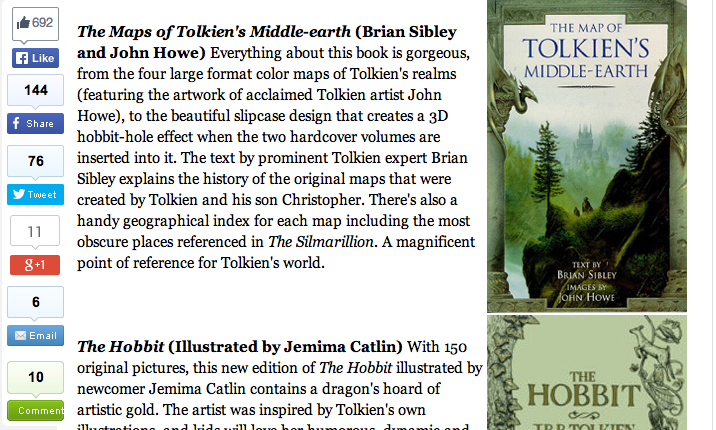
I have a new piece on the Huffington Post. It’s a handy little guide for purchasing Tolkien-themed books for your loved ones this Christmas. Now I couldn’t put every book on this list. I left out the obvious ones (like The Lord of the Rings and The Silmarillion), but I did recommend the new version of The Hobbit (illustrated by Jemima Catlin). Some of the books are classics that I’ve had since I was a kid (like The Father Christmas Letters, The Letters of J.R.R. Tolkien, The Atlas of Middle-earth). And a couple have been published in the last couple of years (Exploring J.R.R. Tolkien’s The Hobbit, Fantasy Freaks and Gaming Geeks). Whatever the case, they’re all excellent books…but I could have easily added another dozen great Middle-earth tomes to this list. Check it out.
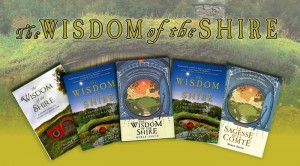
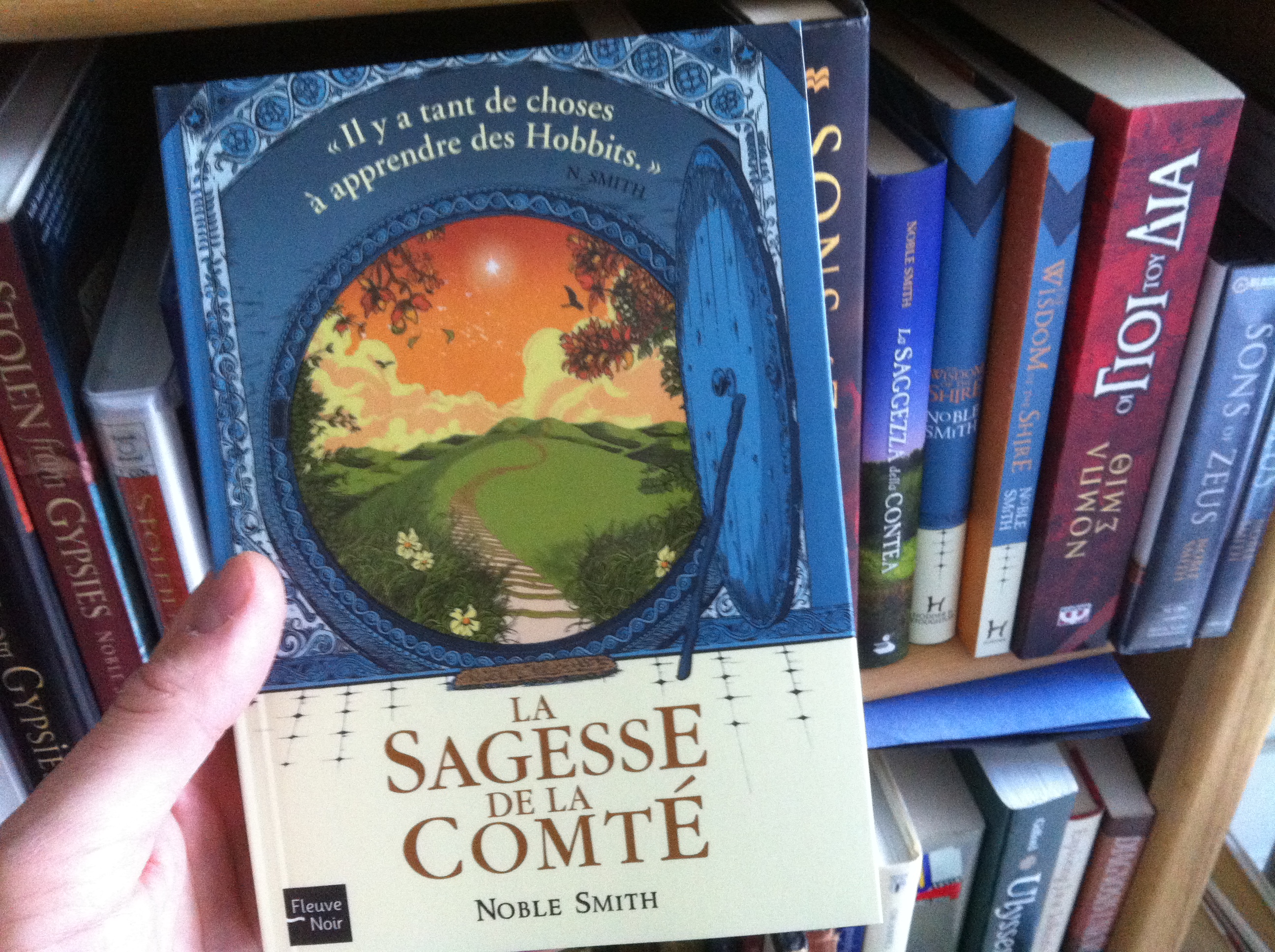
The Tolkienlibrary.com and I have teamed up for a cool give-away! Here is your chance to win one of the following copies of my book The Wisdom of the Shire: A Short Guide to a Long and Happy Life: paperback (x2), audiobook (x1), the UK hardcover (x1) and the French version (x1). Click here to enter.
This competition is open to all EU, US and Canadian residents.
Yesterday I did an interview with the wonderful Kiwi broadcaster Jim Mora on his show “Afternoons” on Radio New Zealand. We talked about J.R.R. Tolkien as an example of a terrific father (despite being a writer!); the notion of “Orcery;” the pleasures of baking bread and making mushroom soup; and the significance of Thorin Oakenshield’s deathbed speech (spoiler alert!) Have a listen.
This week I was interviewed by Tolkien expert Peter Collier, creator of The Tolkien Library.
Tolkien Library. When people talk about your book the word ‘fun’ is always used in one way or another. Is the book meant to be fun?
Noble. Oh, yes! Definitely. I think that life should be lived with good humor and fun. Hobbits are really fun people. They’re always making jokes, even in the most dire circumstances. Merry and Pippin are a couple of comedians. One of the things I do in my book is encourage people to make their own music—“Sing Like a Hobbit” is one of the chapters.
When I found out that my little book about Hobbits was going to be translated into French, I let out a shout of joy! I have such strong emotions associated with France and especially Paris—a city where I lived during a pivotal time in my youth; a magical city I explored with the wide-eyed wonder of a kid who’d grown up in the bleak, culture-starved suburbs of the Pacific Northwest during the seventies and eighties.
I had gone to France at the age of twenty, during the Bicentennial of the French Revolution, to live with my girlfriend, Kendra, who was working there as a fashion model. And I felt like Bilbo leaving the boring Shire for the first time and entering the enchanted world of the Elves in Rivendell.
Kendra and I had met and fallen in love two years before at a funky liberal arts college in Olympia, Washington (Nirvana played one of their first concerts ever in the theatre building on our campus the same month we started dating). Kendra and I instantly bonded over our love of J.R.R. Tolkien. Every night during our freshman year I read to her out loud from The Lord of the Rings.
After getting discovered by a famous New York modeling agency, Kendra dropped out of college and moved to Paris. And soon, lured by the siren song of my beloved as well as the allure of that famous city, I followed after her. I was like some bewitched Man in Middle-earth chasing after an elusive Elf-maid (echoes of the tale of Beren and Lúthien from Tolkien’s The Silmarillion).
In Paris we had a little apartment a block away from Luxembourg Gardens. It was a cozy, cheerful place decorated with nothing more than our stacks of books. We didn’t have a TV, so at night we danced to the music of Prince and the Beatles playing on our cassette deck, or sometimes we simply sat in our room and talked about life, drinking tea. Our one-room apartment was our own little Hobbit-hole on Rue Crébillon.
Nearly every day we walked to the nearby bustling market and bought fresh food and vegetables for our meals. We ate enough delicious baguettes to fill a large bakery, and always covered our bread with liberal amounts of thick French butter (a practice that Bilbo, who shuddered at the notion of “butter scraped over too much bread,” would have greatly approved). At night we went on long strolls, kissing by the Fontaine Saint-Sulpice, or holding hands as we stood on the Pont des Arts, watching the boats go by.
Whenever Kendra had to fly off for runway shows in Milan or magazine shoots in exotic locales in Africa, I stayed in Paris, teaching myself how to be a writer, studying art with a passion, haunting bookstores like Shakespeare and Company, and hanging out in the iconic café La Palette. There, ensconced in the snug wood-paneled room, I fortified myself with strong cups of coffee served to me by an avuncular waiter named Jean, scribbling in my Moleskin notebooks, while occasionally taking breaks for furious bouts of chess with my best friend, Murat; or comparing notes with his sister Elif for the novels we were both fervently writing.
Kendra and I eventually left France and went on to have new adventures. But many of the simple joys of life—things I talk about in The Wisdom of the Shire—we learned during our sojourn in your country. For you French, if you didn’t already know it, are a lot like Hobbits: connoisseurs of fine food and drink; great walkers and lovers of nature; a people who value deep friendship over superficiality and who are intense conversationalists. The kind of people who, like Merry and Pippin, burst into happy song at bars! And just like the Shire-folk you live in a society built upon the majestic principle of egalitarianism.
Bilbo wrote in one of his songs, “The Road goes ever on and on/Down from the door where it began.” Sometimes that great Road of life leads to someplace as magical as France, and those of us who have been lucky enough to have lived there keep that place in our hearts forever.
Revisiting “The Hobbit” is like sifting through the deep piles of loot in a dragon’s hoard: there’s always something new to discover about J.R.R. Tolkien and his classic. Here are 10 secrets concerning the author and his tale that you, good lover of Middle-earth, might have overlooked.
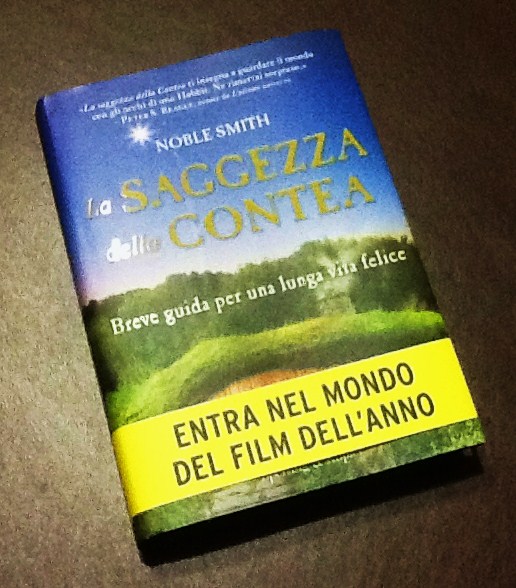
I’m very excited that my new series The Warrior Trilogy just got purchased by an Italian publisher and will be published in that country next year. Last year I did an interview with the Italian translator of my book The Wisdom of the Shire (called La Saggezza della Contea in Italian). The new paperback of The Wisdom of the Shire hits bookstores October 29th from St. Martin’s Griffin in the US. Here is my interview with author, translator and Tolkien scholar Giovanni Agnoloni.
Hi Giovanni. I was really excited when I found out that my book, The Wisdom of the Shire, was sold to an Italian publishing house. But I had no idea that a Tolkien scholar like you would be doing the translation (called La Saggezza della Contea in Italian). How did you first discover J.R.R. Tolkien?
Hi, Noble! First of all, let me thank you for hosting me on your website, which makes me incredibly happy. I was so glad to be offered the opportunity of translating your brilliant essay into Italian. This proved to be a way for me to recover awareness of the very mind-and-soul processes I had gone through, by now 15 years ago, when I’d first encountered J.R.R. Tolkien and started reading The Lord of the Rings. As a previous “roleplayer” (of Dungeons & Dragons, most of all), as a teenager, I already was somehow involved in this fantasy-world “halo”, but the approach to Tolkien’s masterwork was so stunning to me that I couldn’t help beginning to write my first essay even before completing the reading of the book (which anyway happened shortly afterwards, since I “devoured” it J ). The Hobbit and The Silmarillion followed.
Which Tolkien character do you relate to the most?
There are several, indeed. Mostly Aragorn, for the example of humility that he shows in patiently waiting for his due-to-happen (but never obvious) “return” to the throne of Gondor, and for the model of faithfulness to love he constantly shows for Arwen. And then Treebeard, for his philosophic synthesis of insight and simplicity. And Frodo, because he doesn’t step back when he has to face the Shadow.
Could you please talk a little about your essay “Tolkien as a Benchmark of Comparative Literature – Middle-earth in Our World”?
This was a contribution to the 2005 international convention held in Birmingham, UK, on the occasion of the 50th anniversary of the publication of “The Lord of the Rings”, therefore now it appears in the book on the Conference’s Proceedings edited by Sarah Wells for the Tolkien Society (http://www.tolkiensociety.org/2005/proceedings/). It briefly goes through the main contents of my first Tolkien-focussed essay, Letteratura del fantastico(“Fantasic Literature”, Spazio Tre, Milan, Rome 2004) and through some of those of my (at that time still in process) second book Nuova letteratura fantasy (“New Fantasy Literature”) (Eumeswil, 2010). The basic point is the liberating concept of fantasy as emerging from Tolkien’s essay On Fairy-Stories, precisely because it is a key-factor to a reappraisal of the beauty of the real world, and a means to recover awareness of who we are, what we intimately desire and how to make it real, albeit respecting the others’ rights and legitimate aspirations. This premise reverberates onto a most rich range of psychological archetypes and universal themes, such as love, friendship, courage, respect and contemplation of Nature and so on, that are equally emphasized by Tolkien and, although through slightly different emotional vibrations, by other master of universal literature, like Homer, Sappho, Virgil, Dante Alighieri, Ludovico Ariosto, Hermann Hesse and Gabriel García Márquez. By so reflecting, we may gain access to a new vision of Comparative Literature, which is not so much based on philological derivations and assonances, but on a common heritage of emotions and archetypal experiences and visions. Literature can thus prove to be a way to regain possession of the “magic of reality”, I mean, of that subtle, energetic/spiritual dimension that is the “Middle-earth of our world”, as I like to call it.
What were some of the challenges of translating my book into Italian?
Well, I have to say (and not just to sound kind) that it was mostly a pleasure to do this work. Some “trouble” I met in finding the most up-to-date names of places and characters, according to the most recent Italian editions of The Hobbit and The Lord of the Rings, and the exact quotations from such works. While translating non-fiction, I normally try to focus on the accuracy of the words used (being it, as a rule, a rather “technical” and “literal” sort of translation), but in this case I ended up feeling like I was playing an instrument, or executing a musical theme (which is what often happens to me when I’m translating fiction, although I always combine such “artistic” vein – which is probably due to the fact I’m also a writer – with a great respect for the author’s original intentions).
How long did it take you to do the translation?
About two months.
Did you have a favorite chapter of my book?
Although I loved many of them, I found the chapter “Your Own Personal Gollum” especially charming, not only because I consider Gollum one of the most tragic and beautiful figures of universal Literature, but because I completely agreed with what you say there about human relationships and the fact that sometimes it is much better to detach from companies that are not a true help to our (and also to their own) personal growth (and the memory of your “problematic” dog, that nevertheless you loved profoundly, touched me inside, since I adore dogs). More in general, I appreciated the way you always relate Tolkien’s characters and stories to personal experiences of yours and real-life situations that I also felt really involved in while reading (like when you mentioned your terrible minutes stuck underwater as a scuba diver, or the simple beauty of your wedding, or the unexpected meeting with that beggar in New York, after you’d signed your first contract as an author). I believe all these are true epiphanies.
You are from the city of Florence, one of the most amazing cities I’ve ever visited. What’s the best part about living in such an ancient place—a city with so much history?
Well, you said that… It’s beauty, a dimension that encompasses centuries and makes me feel constantly involved in an energetic halo of culture and humanism that, despite the various inconsistencies of the present, still nurtures me. I only regret that, living in the outskirts and working all day, I don’t go to the centre so often (except for my Polish lessons at the University of Florence or for some Hobbit-like beer evenings with friends, once in a while J). But every time I see the Campanile di Giotto, or Piazza della Signoria, or the Ponte Vecchio at sunset, or every time I take in the view from Piazzale Michelangelo, I say to myself that, although I love travelling so much, I will probably never find any other place so beautiful.
You’re an author too. You’ve written a work of speculative fiction (a genre I love) called Sentieri di notte (Paths of Night). What’s the book about?
It is a sci-fi nuanced thriller set in a European night of the year 2025, between Berlin (where a multinational company running all IT flows and energetic provisions has thrown the continent into the darkness of an extended black-out) and Krakow (that is being gradually absorbed by an enigmatic white cloud advancing from the suburbs). It is multifaceted story, a patchwork of places, countries and cultures in which technology offers the pretext and the background to a vicissitude aiming at the return to the Source and at a fusion with the roots of Being. The Chakra of Krakow Castle, obscure threats coming from clerical environments and the surfacing of an intimate vocation focused on Desire and consonant with the original text of an old Aramaic prayer that can win all mind’s resistances. This novel definitely is speculative fiction, as you correctly say, and is also an expression of the Italian literary (and originally sci-fi) movement called Connettivismo (Connectivism) (see http://scifiportal.eu/not-for-connectivists-guide-to-the-galaxy-i/ and http://escholarship.org/uc/item/67b8j74s): in fact, it is the first novel inspired from the poetics of this movement that tries to penetrate into the territories of spirituality and into the realm of mainstream literature.
I’m writing a series set in ancient Greece (The Warrior Trilogy). You write Sci-fi. How come the two of us aren’t writing fantasy like our hero Tolkien? : )
This is really interesting, now that you make me think about it. J It is probably due to the fact that we’ve caught what Tolkien considered the most important point in true fantasy literature: after the Escape into the “otherworld” of fantasy, where are bound to return here and now, to recover the awareness of the world we live in, and hopefully contribute to improving it. Within this context, both your interest in ancient Greece (that I absolutely share) and my investigations into a (likely) near future are coherent consequences of that premise. History is the real world as it used to be, and the next future is how it may become starting from now. Knowing the former is essential to get ready for the latter.
When does The Hobbit come out in Italy, and what are you most looking forward to seeing in the films?
It comes out in December, and I’m definitely looking forward to this! I don’t know, I’m kind of worried that this time they may have changed too many things from the original plot of Tolkien’s novel, but what I really want to see is the Forest of Mirkwood (although I will very probably have to wait for the next episodes for this…).
What are you working on next?
As a translator, I am working on a couple of American and English thrillers and on the first book of a series of “black” novels set in Cuba by the international award winning writer (and an extraordinary friend) Amir Valle (http://amirvalle.com/), who lives exiled in Berlin and fights for the freedom of his Cuban fellow citizens. It is him who showed me some most interesting spots of Berlin which then proved to be fundamental for my inspiration and became part of my novel “Sentieri di notte”. I am also translating this book of mine into Spanish and English, with an eye to very much hoped-for international editions (the Spanish one is almost certain). And very soon I want to start working on its screenplay version.
As a writer, I am writing the sequel of “Sentieri di notte”, that will be partly set in Florence, and have recently finished a thriller (still set in Florence, although in this case without sci-fi nuances) that will hopefully be released next year.
Giovanni Agnoloni (http://giovanniag.wordpress.com) is an Italian, Florence-born (1976) fiction and non-fiction writer, a translator and a blogger. As a non-fiction writer, he has published Letteratura del fantastico(“Fantasic Literature”, Spazio Tre, Milan, Rome 2004), focussed on The Lord of the Ringsby J.R.R. Tolkien (compared with the Greek, Latin and Italian classics) and the English article Tolkien as a Benchmark of Comparative Literature – Middle-earth in Our World, that appears in the publicationThe Ring Goes Ever On: Proceedings of the Tolkien 2005 Conference(The Tolkien Society, 2008; a cura di Sarah Wells). These works of his were presented throughout Italy and in various European and American universities and institutions. He then published Nuova letteratura fantasy (“New Fantasy Literature”) (Eumeswil, 2010), where he compared Tolkien to several 20th century authors such as Hermann Hesse, José Saramago and Gabriel García Márquez. His latest Tolkien studies areTolkien e Bach. Dalla Terra di Mezzo all’energia dei fiori (Galaad, 2011) (“Tolkien and Bach. From Middle-earth to the Energy of Flowers” – a true novelty on the world scene, because, for the first time, it compares he symbolic values of the characters, places and objects of J.R.R. Tolkien‘s Legendarium to the psychological-archetypal models of the “Bach Flowers”, discovered by Dr. Edward Bach) and Tolkien. La Luce e l’Ombra(Senzapatria, 2011)(“Tolkien. The Light and the Shadow”) (http://tolkiengateway.net/wiki/Tolkien:_La_Luce_e_l’Ombra), of which he is the editor, the translator and a co-author, with contributions from several internationally renowned Tolkien scholars.
As a fiction writer, his debut has just occurred (October 2012) with Sentieri di notte, a novel that is an expression of the Poetics of the literary movement of Connettivismo, published by Galaad Edizioniwithin the fiction collection “Larix”, edited by Davide Sapienza. It is a sci-fi nuanced thriller set in a night of Europe between Berlin and Krakow.
The paperback of The Wisdom of the Shire is available on October 29th from St. Martin’s Griffin. It includes a bonus chapter called “The Children of the Shire.” Here’s Chapter 1 of the book that has been translated into eight languages including Spanish, Italian, French, Portuguese, and Finnish.
Chapter 1
HOW SNUG IS YOUR HOBBIT-HOLE?
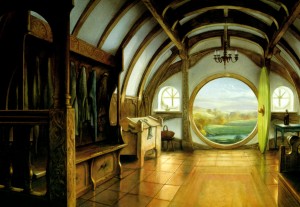
Throughout my life I’ve often heard people describe a snug home or a particularly cozy room as being “just like a Hobbit-hole.” This is one of the highest compliments a Tolkien fan can give, for it’s the sort of place where they’d want to spend some serious leisure time—to read a book or have a conversation, to eat a delicious meal or just sit and think.
On the very first page of The Hobbit Tolkien introduced the world to Bilbo Baggins (and Middle-earth for that matter) with a lengthy and loving description of a Hobbit-hole. His Halflings are, without a doubt, creatures of comfort. But they don’t live in ostentatious mansions or castles of stone. Their cozy homes, built into the sides of hills for optimal insulation, are cheery wood-paneled refuges with fireplaces, well-stocked pantries, featherbeds and pretty gardens right outside their deep-set windows.
Peter Jackson’s film adaptations show Bag End in all its oak paneled and glowing hearth fire glory. Who wouldn’t want to inhabit that welcoming house with its hand-hewn beams, big round front door and cozy sun-dappled kitchen? The fact that you’re reading this book means you’re most likely smiling wistfully right now thinking, I would live there faster than you can say “Drogo Baggins’s boat!”
In The Hobbit, when Bilbo is trapped inside the Elven-king’s palace—existing as an invisible and lonely thief without a bed to call his own—he wishes he were back in his dear home, sitting by the fireplace with a shining lamp on his table. To him this is the height of comfort. Warmth. Light. Peace of mind. We must remember that Bilbo rushed out of his home in such a hurry to join Thorin Oakenshield and his band of Dwarves that he’d forgotten to bring a pocket-handkerchief!
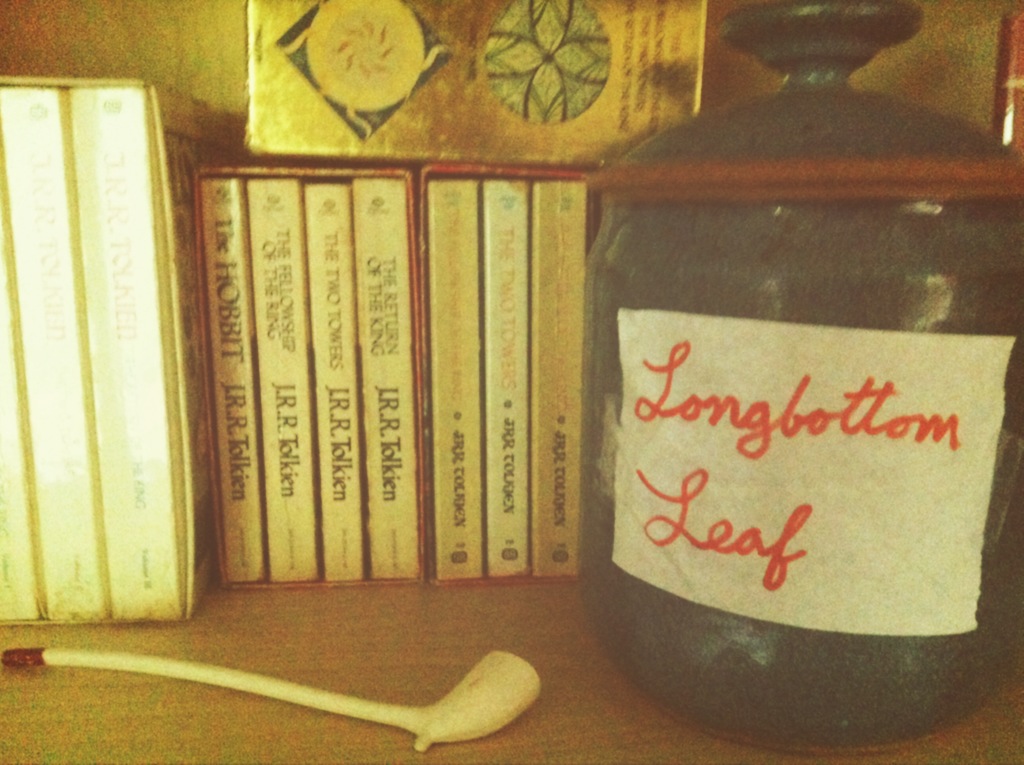
When I was a boy I tried to turn my drab suburban bedroom into my own private Hobbit-hole. I found an old wingback chair at the local thrift shop—a chair suitable for marathon sessions of The Lord of the Rings. I stacked my shelves with Tolkien books I’d rescued from used-bookstores. I started a secondhand pipe collection (assuring my mom they were “Just for show!”) and bought some cheap drugstore pipe tobacco called “Borkum Riff,” placing it in a big jar I labeled Longbottom Leaf. Every time I opened the lid it filled my room with a scent redolent (at least I thought) of Bag End. This room was my refuge, even though it probably reeked like the back of a union hall.
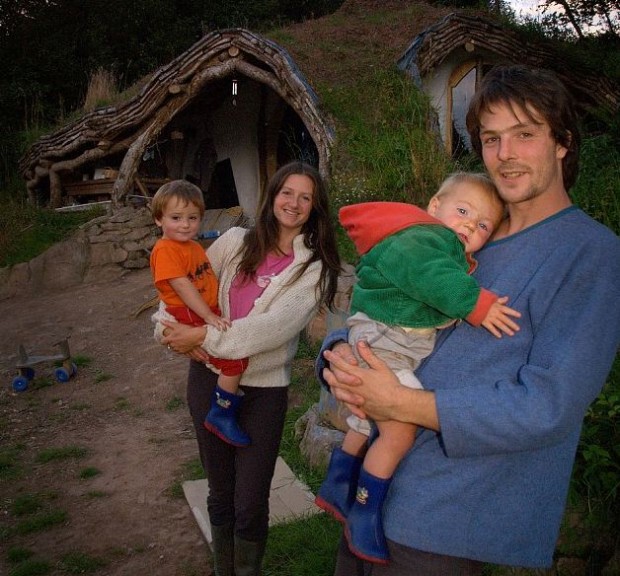
Over the years I’ve found I was not alone in my earnest longing for a Hobbit-hole to call my own. This notion, however absurd, appeals to many of us Shire enthusiasts. Some people have managed to create their own versions of Bag End, like Simon Dale in the United Kingdom who built an abode worthy of Hobbiton. The house, half-buried in the Welsh countryside, was entirely fashioned by hand out of local materials such as stones and wood from surrounding forests. It has a roof that collects water for the garden and an air-cooled fridge.
There are very few places throughout the various Halflings’ adventures that offer a facsimile of the extreme comforts of the Shire home: the magical Rivendell with its whispering trees, soft beds, wistful Elves and Lays of the Elder Days Poetry Nights; Tom Bombadil’s cottage nestled in the woods near the gurgling Withywindle River, complete with chef Goldberry—ravishing daughter of the River-king; and Beorn’s wooden hall with its endless supply of honey cakes, mead and waitstaff of trained bipedal animals.
All of these locations have something in common, despite their curious inhabitants. Like Hobbit-holes they’re safe, warm, comfortable and filled with good food. They’re homey places to rest and regenerate before a long journey, and they’re connected to the natural world in a way that makes them almost part of the surroundings.
Modern homes are a sharp contrast to the cheery Hobbit-holes and have become repositories for cheap imported junk that we toss out like so much rubbish after a few short years of use. For many of us our connection to the world outside our homes is what we see from our cars in bumper-to-bumper traffic on the way to hermetically sealed office buildings. Urban sprawl or “Orc-ification” is turning our cities and towns into vast and ugly corporate retail outlets.
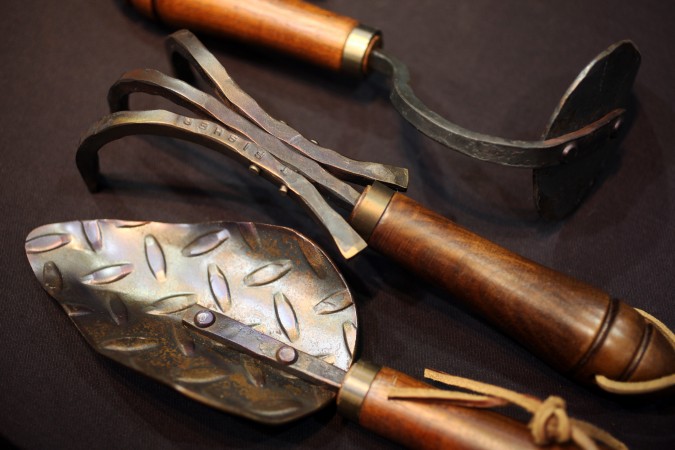
Everything inside and outside a Hobbit-hole would have been made by hand. And it would all have been created to last a lifetime, from the brass knob in the center of the big round front door, to the clay mugs in the kitchen, to the chair in front of the fire. When did we all become so helpless that we stopped learning how to make or fix the simplest things? Why don’t we expect the same sort of permanence and quality in our own lives?
There are ways to change. Internet sites like Makezine.com show people all over the globe making remarkable utilitarian objects by hand, and Instructables.com will teach you the step-by-step process of how to build and mend things you would have thought were impossible. Online retailers like Etsy allow hundreds of thousands of craftspeople from all across the world to sell their handmade items (everything from furniture to clothes to ironmongery) to millions of buyers. These artisans are making amazing things out of recycled products as well as upcycled materials.
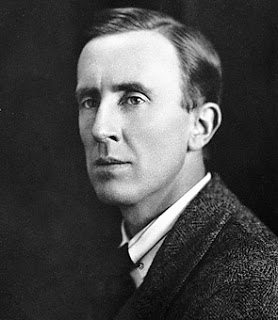
Seventy years ago Tolkien lamented how machines seemed to be taking over the world. Everywhere he looked trees were being cut down to make way for ugly garages, gasworks and factories. (Imagine how he would feel about the state of things now.) He wrote most of The Lord of the Rings during WWII at his house in Oxford while thunderous warplanes roared overhead flying off to Europe. He mused grimly that Moloch, a god that sacrificed its firstborn sons, must have taken over as ruler of the world.
Tolkien wrote often to his son Christopher (his chief audience for his stories) who was serving in the Royal Air Force at the time, sending him chapters of The Lord of the Rings as soon as he could get copies typed up. In his letters he described to his son the little joys of life back in Oxford. He also told him about the simple trials and tribulations of being a homeowner. Reading about the mundane, when you’re far from home, is sometimes just as interesting as hearing about the sublime.
Tolkien had seen the horrors of mechanized war firsthand, having served in the trenches of WWI in France. Like the Hobbits in The Lord of the Rings, he’d returned from the desolation of the battlefield to a changed world—a world where all but one of his friends no longer walked the Earth. Ten years after the Great War he was staring at a blank page of paper when the opening lines of The Hobbit popped into his head.
And thus was born the first Hobbit—the reluctant hero who departs his beloved abode and returns from a great adventure a changed man. We’d all be lucky in life if we had the chance to experience an unexpected adventure, and then make our way back safely to a place of comfort. Sometimes the only way we can appreciate our home and the simple happiness it has to offer is to be away from it for a while.
After the battle of the Pelennor Fields, when Merry is recovering in Gondor’s Houses of Healing from his brave attack on the dread Witch-king of Angmar, he tells Pippin that one thing alone has sustained him through the hardships of his terrible journey: the deep spiritual roots he’s put down in his beloved Shire.
This is Merry’s Hobbit-hole of the mind.
Try to think of a place in your own life that was like a Hobbit-hole. It could have been your beloved grandparents’ living room, or a kindly music teacher’s studio or a good friend’s comfy apartment. What was it about that place that made you feel at home? That allowed you to dream? Was it the space itself, or the people in it? Or a combination of both? At some point in your life your subconscious put down “roots” in this place, and you can take strength from this memory, even if the actual place no longer exists.
You can create a snug “Hobbit-hole” wherever you are—in your office, in a hotel room, in a college dormitory, in an apartment in the city or a bedroom in the suburbs. Because the space which you inhabit is irrelevant compared to the power of your mind to project contentment. For me that contentment has always meant having a good book at hand, so that no matter where I was stuck physically, my mind was free to soar.
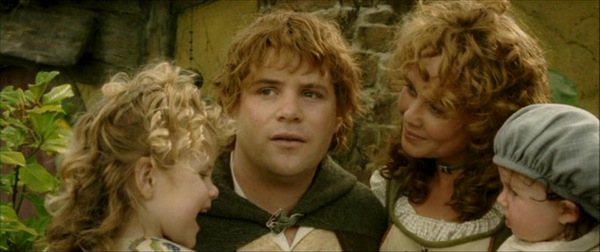
In the final scene of The Lord of the Rings, Sam Gamgee returns from the Grey Havens to Bag End, arriving at night. He’s just said good-bye to Frodo forever and he is terribly sad. But then he sees the cheery yellow glow of firelight emanating from the house that now belongs to him—a home bequeathed to him by Frodo. The house itself—the structure—is not important, however. It’s what’s inside: his loving wife and daughter waiting for him with a warm meal on the table.
It’s a beautiful bookend to Tolkien’s beloved novels: The Hobbit starts at Bag End with a callow bachelor and The Lord of the Rings ends there with a wise father. All of Tolkien’s great adventures are set in between the opening and closing of the door to a simple and yet miraculous dwelling called a Hobbit-hole.
The Wisdom of the Shire Tells Us …
“Your true home is inside your heart and stays with you wherever you go; but a nice snug room is a lovely thing to come back home to!”
Pre-order the paperback of The Wisdom of the Shire now from Amazon and receive it October 29th.
If Gollum and Mick Jagger went into the Thunderdome, who would come out alive? The answer to this and other important questions are revealed in the Dungeons & Dorkwads special Dork-off: Hobbitpalooza Part 2.
J.R.R. Tolkien’s character of Tom Bombadil was based on one of the author’s beloved childhood toys—a doll that accidentally got flushed down a toilet. Many Tolkien aficionados wish that the enigmatic inhabitant of the Old Forest had stayed in that loo, never to resurface in Tolkien’s subconscious.
I’m not one of those Bombadillo bashers, however. I don’t understood Tolkien fans who have a “Knights who say ni” reaction whenever you utter the word “Bombadil.” Or the type who quote Tim Benzadrine (Tom’s inane caricature from Bored of the Rings) with idiotic delight. I’ve always loved Tolkien’s jolly fellow with his bright blue hat and his boots of yellow.
This error message is only visible to WordPress admins
About Me
My name is Noble Smith. I'm a lifelong Tolkien fan, novelist, video game writer, documentary film producer, and father of two. My book The Wisdom of the Shire is published by Thomas Dunne Books/St. Martin's Press. I am currently Franchise Narrative Director for the Age of Empires video game series from Microsoft/Xbox. info [@] shirewisdom.com.
Follow me on Twitter @ShireWisdom
Follow me on Instagram @TolkienBeliever